Financial literacy is one of the most important real-world topics we can teach middle and high school students. While students learn equations, Algebra, and statistics in math class, they also need opportunities to understand how math affects everyday decisions involving money.
The Texas Essential Knowledge and Skills standards for personal financial literacy, MA.8.12.A–G, focus on helping students become informed consumers, responsible borrowers, and smart savers. These standards connect classroom math to real-life situations students will eventually face—like using credit cards, paying for college, comparing loans, and planning for retirement.
When students see how math applies to real financial choices, engagement increases because the learning suddenly feels meaningful. These are skills that are vital for all middle and high school students including those outside of Texas.
💳 Understanding the Cost of Credit
One of the most eye opening lessons for students is learning how borrowing money works.
Many teenagers assume that loans simply allow people to buy things they cannot afford right away. What students often do not realize is that borrowing money usually means paying back more than the original amount because of interest.
Students compare how:
Interest rates
Loan lengths
Monthly payments
affect the total cost of borrowing.
For example, consider two car loans:
Loan A: 3 years at 6% interest
Loan B: 7 years at 5% interest
Even though Loan B may have a lower monthly payment, the borrower could end up paying thousands more over time.
This is a powerful moment for students because they begin to understand that “cheaper per month” does not always mean “less expensive overall.”
Using online loan calculators Loan Calculator — Mr. Slope Guy helps students visualize these differences quickly and makes abstract math feel practical.
📱 Credit Cards and Easy Access Loans
Students are surrounded by advertising that encourages spending now and paying later. That may not be a good idea.
This standard asks students to calculate the total cost of repaying loans under different interest rates and time periods. Students also explore:
Credit cards
Payday loans
Easy access loans
Installment plans
Many students are shocked to discover how quickly debt grows when only minimum payments are made.
For example:
A $1,000 credit card balance
At a high interest rate
With minimum payments only
It can take years to repay.
Students quickly learn an important financial lesson:
Borrowing money can make purchases more expensive than expected.
Activities involving online calculators allow students to experiment with different interest rates and repayment periods. This hands on exploration builds critical thinking and problem solving skills while reinforcing percent and decimal concepts.
🌱 The Power of Saving Small Amounts
One of the best financial habits students can develop is consistent saving.
Students learn how small amounts of money invested regularly can grow over time.
This is where students begin to see the magic of long term saving and investing.
Imagine saving:
$10 per week
$25 per month
or part of a birthday gift each year
At first, the amounts seem small. But over time, savings can grow significantly through interest and investment growth.
Students often believe that investing is only for wealthy adults. Teaching this standard helps them realize:
Anyone can start saving
Small habits matter
Time is one of the greatest financial advantages
This lesson also introduces students to saving for:
College
Emergencies
Retirement
Future goals
The earlier students understand this concept, the more likely they are to develop healthy financial habits.
📈 Simple Interest vs. Compound Interest
One of the most valuable financial literacy lessons students can learn involves comparing simple interest and compound interest.
Students calculate and compare these two types of earnings.
Simple interest is calculated only on the original amount.
Compound interest, however, earns interest on:
the original amount
plus previously earned interest
This creates long term growth.
A helpful example is:
Student A saves $1,000 using simple interest
Student B saves $1,000 using compound interest
Over time, Student B’s money grows faster because the interest continues building upon itself.

Compound Interest Formula
Many students find this concept fascinating because they begin to understand why adults talk so much about investing early.
This lesson naturally connects math skills with future financial planning.
💵 Comparing Different Payment Methods
Today’s students see many ways to pay for purchases:
Cash
Debit cards
Credit cards
Mobile payment apps
Buy now and pay later services
Students examine the advantages and disadvantages of each payment method.
For example:
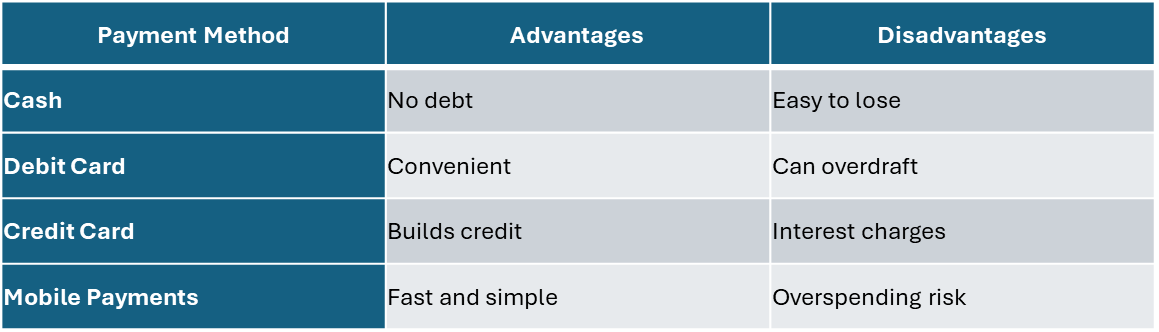
This standard encourages students to think critically about convenience versus responsibility.
Many middle school students already use digital payment systems through family accounts, gaming purchases, or online shopping. These conversations feel highly relevant to them.
✅ Financial Responsibility vs. Financial Irresponsibility
One of the most important life lessons in financial literacy is understanding consequences.
Students analyze whether decisions represent responsible or irresponsible financial behavior.
Examples of responsible decisions:
Saving before making a purchase
Comparing prices
Avoiding unnecessary debt
Creating a budget
Examples of irresponsible decisions:
Overspending
Ignoring bills
Using credit carelessly
Making impulse purchases
Students begin to understand that financial decisions today can affect opportunities tomorrow.
This standard promotes decision-making skills that extend far beyond math class.
🎓 Planning for College Costs
College can be expensive, and many students have no idea how much it actually costs.
Students estimate:
Two-year college costs
Four-year university costs
Family contributions
Savings plans
Students also create periodic savings plans to help contribute toward future college expenses.
This is one of the most practical and empowering standards because it helps students realize:
College costs can be planned for
Scholarships and savings matter
Starting early helps tremendously
Students can compare:
Community college tuition
Public university costs
Housing expenses
Meal plans
Transportation
Books and fees
From there, students calculate how much money would need to be saved monthly or yearly to help cover expenses.
This lesson transforms financial literacy into future planning.
🚀 Why Financial Literacy Matters
Financial literacy gives students tools they will use for the rest of their lives.
When students understand:
interest,
loans,
saving,
investing,
budgeting,
and responsible spending,
Students are better prepared to make smart financial choices as adults.
These standards help students move beyond simply solving math problems. They help students become thoughtful consumers, informed borrowers, and confident planners for the future.
And perhaps most importantly, financial literacy helps students realize that small financial decisions made today can create big opportunities tomorrow.
📚 Looking for Ready-to-Use Financial Literacy Activities?
If you’re teaching personal financial literacy skills in middle school, having engaging and meaningful resources can make all the difference.
For less than $20, this comprehensive bundle covers essential real-world topics including:
Loans and interest
Budgeting
Credit cards
College costs
Saving and investing
Financial responsibility
Personal Economics and life skills
Perfect for:
8th and 9th grade math
Financial literacy electives
Homeschool
Reading Comprehension
Advisory classes
Career readiness
Sub plans
Independent practice
👉 Click link to preview and download: “Financial Literacy Activities Bundle Grades 8 and 9 for Life Skills & Economics“.
Designed to help students connect classroom math to real-life money decisions, this bundle makes financial literacy practical, engaging, and easy to teach.