5 Smart Ways to Pay for College: A Financial Literacy Guide for the Future
When school students hear the word college, they often think about dorm rooms, new friends, parties, and future careers. But there’s one big question many students and families don’t fully understand yet:
How do you actually pay for college?
That’s where financial literacy comes in. It is important to encourage students to think like informed consumers and future investors by exploring real-world financial decisions. One of the most powerful applications? Learning the different ways to fund a college education.
Let’s break it down in a student friendly way you can bring straight into your classroom.
💰 Why Understanding Funding Options Matters
College is one of the biggest financial decisions a person will make. Teaching students early helps them:
Understand that college is possible for everyone
Compare financial choices logically
Avoid unnecessary debt later in life
Build long-term planning skills
Financial literacy isn’t just math, it’s life skill.
🎓 The 5 Main Ways to Pay for College
Most students use a combination of methods to cover college costs. According to financial aid resources, the most common options include savings, grants, scholarships, work study, and student loans .
Let’s explore each in a way your students will understand.
1. 💵 Savings: Planning Ahead
This is the simplest concept for students to grasp.
Savings means setting aside money over time to pay for future education. Families might:
Save money in a bank account
Use a special college savings plan (like a 529 plan)
Invest over time
2. 🎁 Grants: Free Money Based on Need
Grants are money you do NOT have to pay back.
They are usually:
Based on financial need
Provided by the government or schools
Grants are considered “gift aid,” meaning they reduce the cost of college without creating debt.
💡 Grants may be one of the very few times in life people give you money and don’t expect to get repaid.
3. 🏆 Scholarships: Earned Free Money
Like grants, scholarships do not need to be repaid.
But they are usually awarded based on:
Grades
Sports
Talents
Community service
Unique skills or backgrounds
Scholarships can come from schools, businesses, or organizations .
4. 💼 Work Study: Earn While You Learn
Work study programs allow students to have part-time jobs while attending college.
Students might:
Work in a library
Help in an office
Tutor other students
Help with technology
They earn money to help pay for expenses while gaining experience .
5. 💳 Student Loans: Borrow Now, Pay Later
Loans are borrowed money that must be paid back with interest.
This is often the last option after free money is used.
Key ideas:
You must repay loans after college
Interest makes the total cost higher
Smart borrowing is important
Experts recommend using grants and scholarships first before taking loans .
💡 Classroom Discussion:
“Would you rather get free money or borrow money? Why?”
🧠 Teaching Strategy: Make It Real
To align with financial literacy standards, go beyond definitions:
Try This Activity:
Give students a “college cost scenario”:
College Cost: $20,000 per year
Have them “build a plan” using:
$5,000 scholarship
$3,000 grant
$2,000 work-study
Savings
Loans
Ask:
How much is left?
What’s the smartest way to cover the rest?
This builds problem solving, reasoning, and real-life decision-making.
🚀 Final Thought: Empowering Future Decision-Makers
When students understand how to pay for college, they begin to see their future differently. Instead of thinking, “I can’t afford college,” they start thinking:
👉 “I have options.”
That mindset shift is exactly what financial literacy education is all about.
📚 Ready-to-Use Classroom Resource
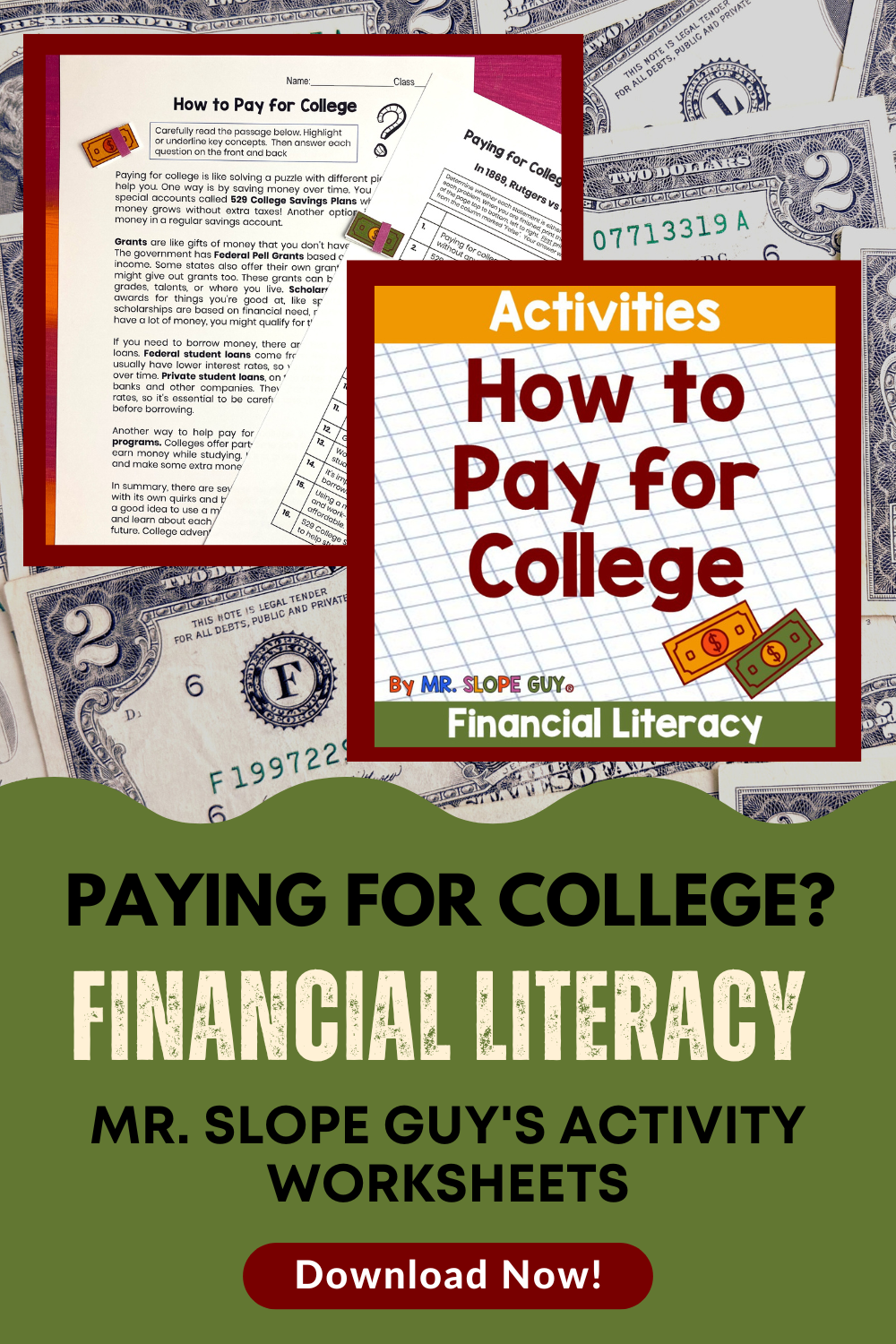
If you want a no-prep, engaging way, for about $3, to teach about paying for college with real-world reading, comprehension questions, and financial literacy connections, check out this resource:
Click link to preview and download👉 How to Pay for College Financial Literacy Reading Comprehension Printable Activities
Perfect for:
TEKS 6.14G alignment
Middle school math or financial literacy classes
Sub plans or independent practice
Reinforcing real world problem solving
Life Skills and Economics
Business Education
Help your students connect math to their future!