Reducing Expenses: Teaching Students to Decode the Language of Prices for Personal Budgets
If we want students to become financially independent adults, we have to teach them more than how to earn money. We have to teach them how to keep it.
That’s exactly what Florida’s high school financial literacy standard SS.912.FL.3.4 focuses on: helping students understand how consumers can reduce expenses by analyzing how prices are expressed and recognizing the influences that shape purchasing decisions.
At first glance, this standard may seem simple. “Reducing expenses” sounds like basic budgeting advice. But in reality, it asks students to do something much more powerful, The focus is to think critically about how retailers present prices and how those presentations influence behavior.
Let’s break it down and explore how to bring this standard to life in your classroom.
The Hidden Influence of Price Expression
Walk your students through a simple scenario:
Two packages of paper towels sit on the shelf:
A 6-roll pack for $8.49
An 18-roll pack for $21.99
Many shoppers immediately grab the cheaper looking option since the lower total price feels like a better deal. But once students calculate unit pricing, they often discover the larger pack costs less per roll.
That moment is financial literacy in action.
Students should explore how retailers express prices in ways that influence perception. This includes:
Unit pricing (cost per ounce, per roll, per pound)
Bulk pricing comparisons
“Buy One, Get One Free” promotions
Psychological pricing ($9.99 vs. $10.00)
Loyalty programs and discounts
Limited-time sales language
Students begin to see that price is not just a number — it’s a message.
Teaching Students to Compare Value (Not Just Price)
A key component of this standard is helping students understand that the lowest price is not always the best value.
This is where the conversation shifts from simple math to critical thinking.
Have students compare:
Generic vs. name brand products
Cooking at home vs. buying prepared meals
Discount stores vs. warehouse clubs
Bulk purchases vs. smaller packages
When students calculate cost per unit, they often realize that the “cheaper” option can actually cost more over time.
But here’s where it gets interesting: bulk buying only saves money if the product gets used.
That opens the door to an important concept of food waste as a hidden expense.
Food Waste: The Budget Killer No One Talks About
A “Buy One, Get One Free” deal feels like a win… until half of it spoils in the refrigerator.
Students need to evaluate how promotions may encourage overbuying. A lower unit price doesn’t matter if the product ends up in the trash.
Have students reflect on:
How often food gets thrown away at home
Whether bulk purchases match actual consumption habits
How convenience affects spending decisions
Cooking at home, for example, may seem more expensive because multiple ingredients must be purchased. But when students calculate the cost per serving, they often discover it’s significantly cheaper than takeout and probably healthier.
This is where financial literacy intersects with real life.
Scrimp, Splurge, Strategize
One powerful classroom framework for this standard is the idea of:
Scrimp. Splurge. Strategize.
Scrimp on items where quality differences are minimal (basic household supplies, pantry staples).
Splurge on items where durability or safety truly matters (shoes, car maintenance, technology).
Strategize by comparing options, planning purchases, and avoiding impulse buying.
Students begin to understand that reducing expenses does not mean eliminating enjoyment. It just means making intentional choices. It’s more of a mindset shift.
Building Responsible Consumers
What is the role and responsibility of being a consumer?
Students should ask:
Is this a real deal or clever marketing?
Does this purchase align with my needs?
Am I reacting to packaging, branding, or actual value?
How does store choice affect pricing?
Warehouse clubs, convenience stores, discount chains, and online retailers all express prices differently. When students compare these models, they begin to see how perception drives behavior.
Classroom Application Ideas
Here are a few engaging ways to teach this standard:
Grocery store price comparison simulations
Unit price scavenger hunts
Budget building challenges
Food waste reflection activities
“Is It Really a Deal?” promotional analysis
These activities turn abstract financial ideas into concrete skills students can use immediately.
Because one day, your students won’t be solving for x, they’ll be choosing between 6 rolls or 18.
Ready-to-Use Reducing Expenses Activities
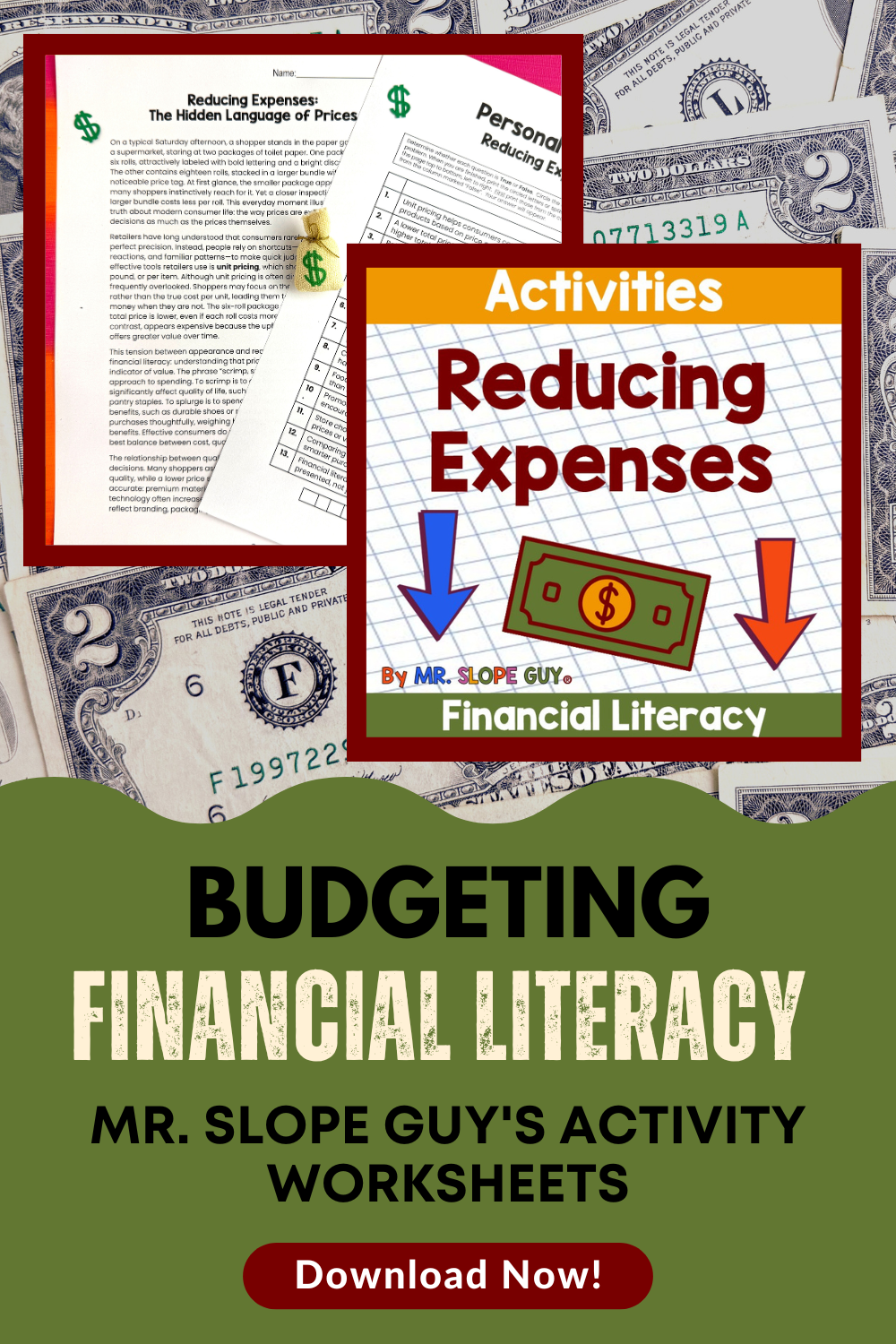
If you're looking for a structured, classroom ready resource for about $3, I’ve created a comprehensive set of personal budgeting and reducing expenses activities designed specifically for high school students.
These activities help students:
Analyze how prices are expressed
Compare unit pricing
Evaluate promotions
Identify ways to reduce food waste
Apply “scrimp, splurge, strategize” thinking
Build practical budgeting skills
You can check out the full resource here:
Click here to preview and download: “Reducing Expenses Personal Budget Worksheets Financial Literacy Activities”.
If you’re teaching financial literacy standards this resource will help your students move beyond theory and into real-world financial confidence.
Because financial literacy isn’t just about earning money. It’s about knowing how to keep it.