How to Teach Taxes, Budgeting, and Interest to Middle School Students
If you’ve ever watched a middle schooler spend $25 in five minutes on snacks, games, or random online purchases… you already know: financial literacy can’t wait until high school.
Money habits start early. By the time students are teenagers, many already have beliefs and behaviors around spending, saving, and earning. Teaching financial literacy in middle school gives students a head start on real-world decision making before the stakes get high.
Let’s break down the most important money skills every middle schooler should start learning and how they connect to real life.
💰 1. Income Tax: “Wait… I don’t keep all my money?”
One of the biggest shocks students experience when they get their first job is seeing their paycheck.
That’s where income tax comes in.
Middle schoolers don’t need to memorize tax brackets, but they should understand:
Why taxes exist (funding roads, schools, services)
The difference between gross income vs. net income
Why your paycheck is smaller than expected
👉 Real-life connection: Students quickly learn that earning money isn’t the same as keeping money.
🛒 2. Sales Tax: The Sneaky Extra Cost
Sales tax is the perfect “gotcha” concept for middle schoolers.
They see a price tag and assume that’s the total. However, at checkout the price increases.
Teaching sales tax helps students:
Calculate percentages in real-world situations
Estimate total costs before buying
Avoid overspending
📊 3. Net Worth Statements: What Are You Actually Worth?
Middle schoolers love comparing things and net worth is surprisingly engaging.
A net worth statement introduces:
Assets (what you own)
Liabilities (what you owe)
Net worth = Assets – Liabilities
Even if their “assets” are just a gaming console and some cash, students begin to understand:
👉 Wealth isn’t about what you spend, it’s about what you keep.
📅 4. Personal Budget: Telling Your Money Where to Go
A personal budget is one of the most practical skills students can learn.
Instead of asking, “Do I have enough money?” students begin asking:
👉 “Is this how I want to spend my money?”
Key ideas include:
Income vs. expenses
Needs vs. wants
Saving for goals
Middle school is the perfect time to introduce budgeting because:
Students start receiving allowance or gift money
They begin making independent spending choices
📈 5. Interest: Simple vs. Compound (The Game Changer)
This is where financial literacy starts to feel powerful.
Simple Interest
Students learn that money grows at a steady, predictable rate.
Compound Interest
This is the “mind blowing” moment:
👉 You earn interest on your interest.
Even a basic example can show students:
Why saving early matters
How debt can grow quickly (credit cards!)
If there’s one concept that changes financial futures, it’s this one.
🎯 6. Monetary Incentives: Why People Make Money Choices
Why do people work overtime? Why do stores run sales?
Monetary incentives help students understand behavior.
They learn:
People respond to rewards and costs
Businesses use incentives to influence decisions
Not all incentives are good (hello, impulse buying)
👉 This builds critical thinking: “Is this deal actually worth it?”
👨👩👧 7. Family Budget: Real Life, Real Decisions
A family budget brings everything together.
Students begin to understand:
Adults make trade offs every day
Big expenses (rent, groceries, bills) come first
Money decisions affect the entire household
This builds empathy and awareness:
👉 “Oh… that’s why we don’t eat out every night.”
🚀 Why Start in Middle School?
Middle school students are at the perfect stage:
Old enough to understand abstract concepts
Young enough to build strong habits early
Teaching financial literacy now helps students:
Avoid debt traps later
Make smarter spending choices
Build confidence with money
And maybe most importantly…
👉 It replaces guessing with understanding.
🧠 Bringing It All Together
When students learn about:
Income tax
Sales tax
Net worth
Budgeting
Interest
Incentives
Family finances
They’re not just learning math…
They’re learning how the world works.
✏️ Make It Stick (Classroom Idea)
Turn financial literacy into a simulation:
Give students a “job” and income
Apply taxes
Require a budget
Add surprise expenses
Offer incentives and choices
Suddenly, every decision matters—and students feel the consequences in a safe environment.
📚 Classroom-Ready Resource to Save You Time
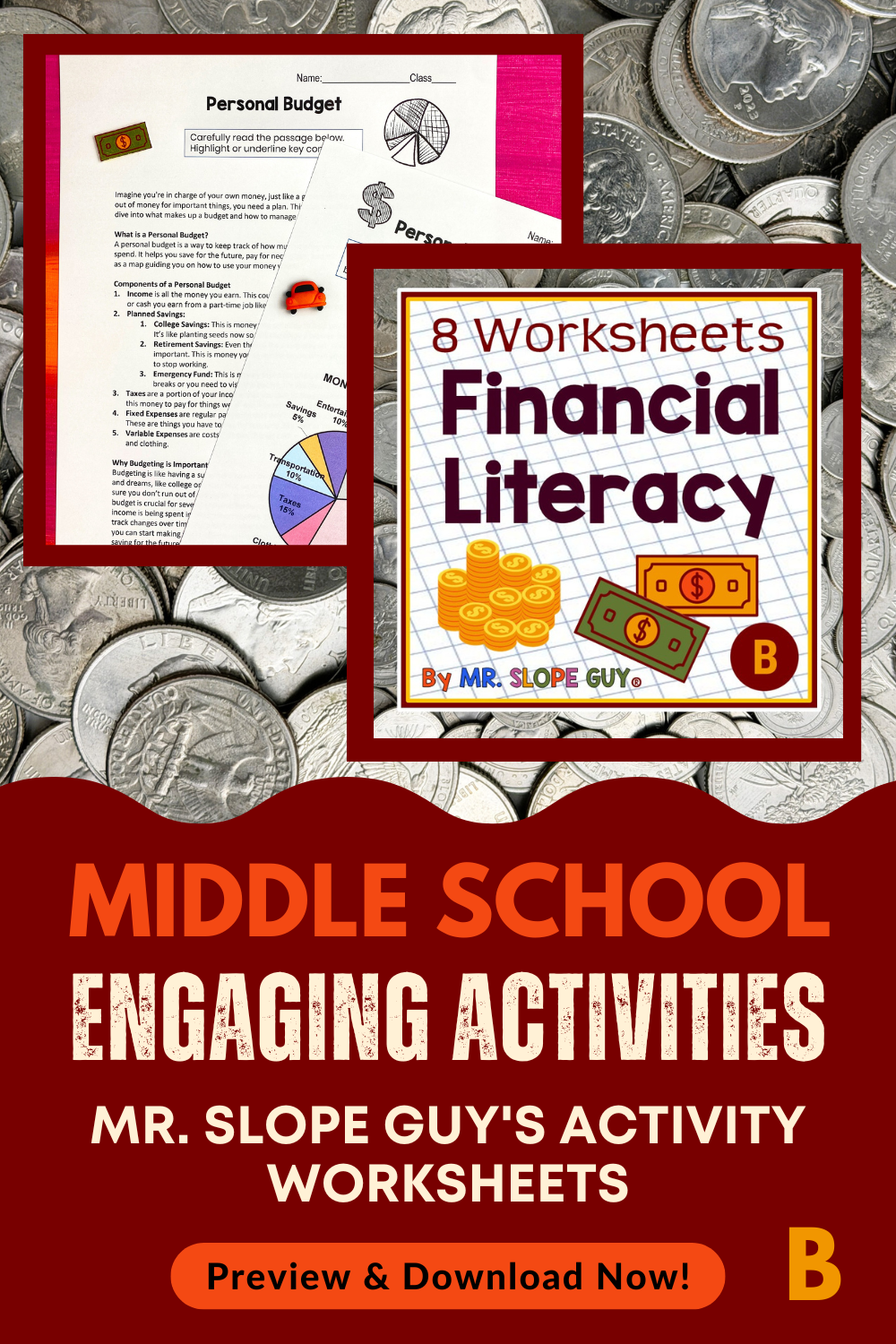
If you’re looking for a way to bring all of these concepts to life, for less than $20, without spending hours creating materials, this bundle of resource is a perfect fit:
Click link to preview and download: “👉 Financial Literacy Worksheets & Reading Comprehension Activities for Middle School”.
This resource helps students actually understand money concepts through:
Engaging real-world reading passages
Skill building questions
Topics like taxes, budgeting, interest, and more
Print and go convenience (perfect for busy teachers or homeschool parents)
It’s ideal for:
Middle school math, life skills, or social studies classes
Financial literacy units
Sub plans or independent practice
Reinforcing real-world math skills
📌 Final Thought
We teach students how to solve equations…
But if we don’t teach them how to manage money, we’re leaving out one of the most important real-world skills they’ll ever need.
Start early. Keep it practical. Make it real.
Because one day, those middle schoolers will be making financial decisions that actually count.