Building a Budget with the 50–30–20 Rule: Turning Financial Literacy Standards into Real-Life Skills
Imagine handing students their first paycheck and asking them one simple question:
“Where should your money go?”
Most students will say something like:
“Food!”
“Games!”
“Shoes!”
“Saving… maybe?”
That moment perfectly captures why Florida Financial Literacy Standard SS.912.FL.3.9 exists. And even if you are not in Florida, it still matter. Students don’t just need math skills. They need a framework for making smart financial decisions. That’s where the 50–30–20 budgeting rule becomes a powerful teaching tool.
What Is the 50–30–20 Rule?
The 50–30–20 rule is a simple guideline for managing income:
50% Needs → essentials like rent, groceries, utilities, transportation
30% Wants → entertainment, hobbies, eating out, subscriptions
20% Savings → emergency fund, future goals, investments
For students, this rule transforms budgeting from an abstract idea into a clear, actionable plan.
Why Students Struggle with Budgeting
1. Needs vs. Wants Confusion 🤔
Students often believe everything is a “need.” Is a smartphone a necessity or a luxury? What about streaming services?
Sorting activities help students distinguish between:
Essential expenses (needs)
Discretionary spending (wants)
2. Thinking in Percentages
Budgeting requires students to calculate percentages of income, which reinforces:
Percent calculations
Proportional reasoning
Real-world math application
For example, if a student earns $1,000 per month:
Needs: $500
Wants: $300
Savings: $200
Suddenly, percentages have meaning.
3. Short-Term vs. Long-Term Thinking ⏳
Students often focus on immediate gratification rather than future goals. Budgeting lessons help them explore:
Saving for college
Building an emergency fund
Planning for big purchases
Writing prompts encourage students to explain how budgeting supports both short-term enjoyment and long-term stability.
Making the Standard Come Alive in the Classroom
📖 Reading Passages
Students should analyze realistic financial scenarios:
A teen with a part-time job
A college student managing expenses
A young adult balancing rent and savings
These stories make budgeting relatable.
🗂️ Sorting Activities
Students classify expenses into:
Needs
Wants
Savings
This hands on approach deepens understanding and sparks discussion.
✍️ Writing Prompts
Students explain:
Why budgeting matters
How priorities affect financial stability
What changes they would make to a sample budget
This builds critical thinking and financial literacy simultaneously.
Why the 50–30–20 Rule Works So Well for Students
Unlike complex budgeting systems, the 50–30–20 rule is:
Easy to remember
Flexible for different incomes
Applicable to real life
It gives students a blueprint they can actually use beyond the classroom.
And for teachers, it’s a gold mine of interdisciplinary learning:
Math (percentages, ratios)
Reading comprehension
Writing and reasoning
Life skills
From Classroom Activity to Lifelong Skill
When students practice budgeting with real numbers and realistic scenarios, they begin to see money differently. They realize that:
Every spending choice has consequences
Saving is a habit, not an accident
Financial stability is built one decision at a time
That’s the true goal of financial literacy education.
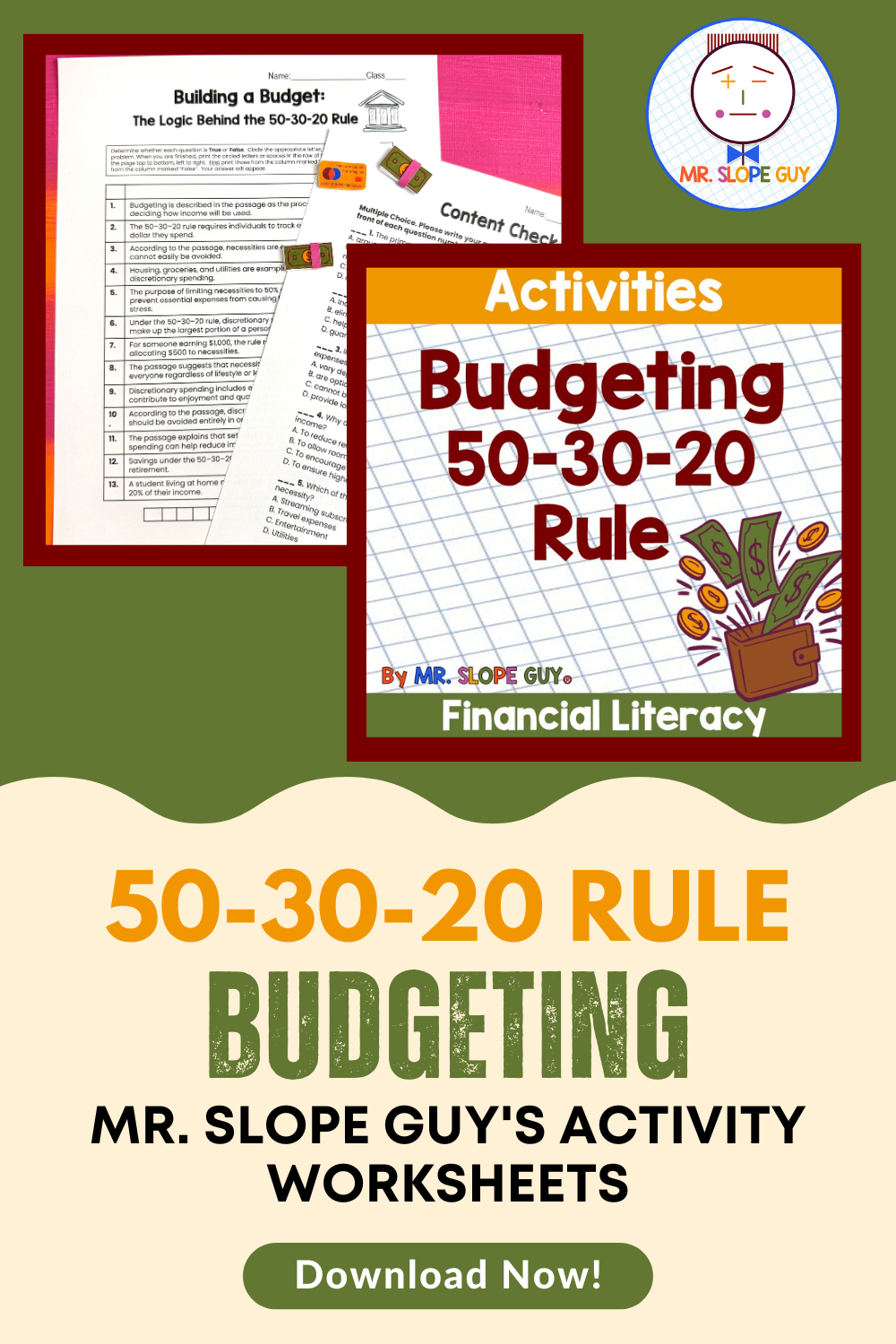
Ready-to-Use Budgeting Activities for Your Classroom
If you want engaging activities to use with your students for about $3, then these are great activities for you.
Click link to preview and download: “👉 Budgeting Worksheets: Financial Literacy Skills Practice – 50–30–20 Rule Activities”.
Why Teachers Love These Activities:
Aligned with Financial Literacy Standards
Includes reading passages, sorting tasks, and writing prompts
Reinforces needs vs. wants vs. savings
Perfect for middle school and high school financial literacy
Printable, classroom ready, and easy to grade
Help your students move beyond “spend it all” thinking and toward smart, strategic money habits. With the 50–30–20 rule, they’re not just learning math. They’re building a future.