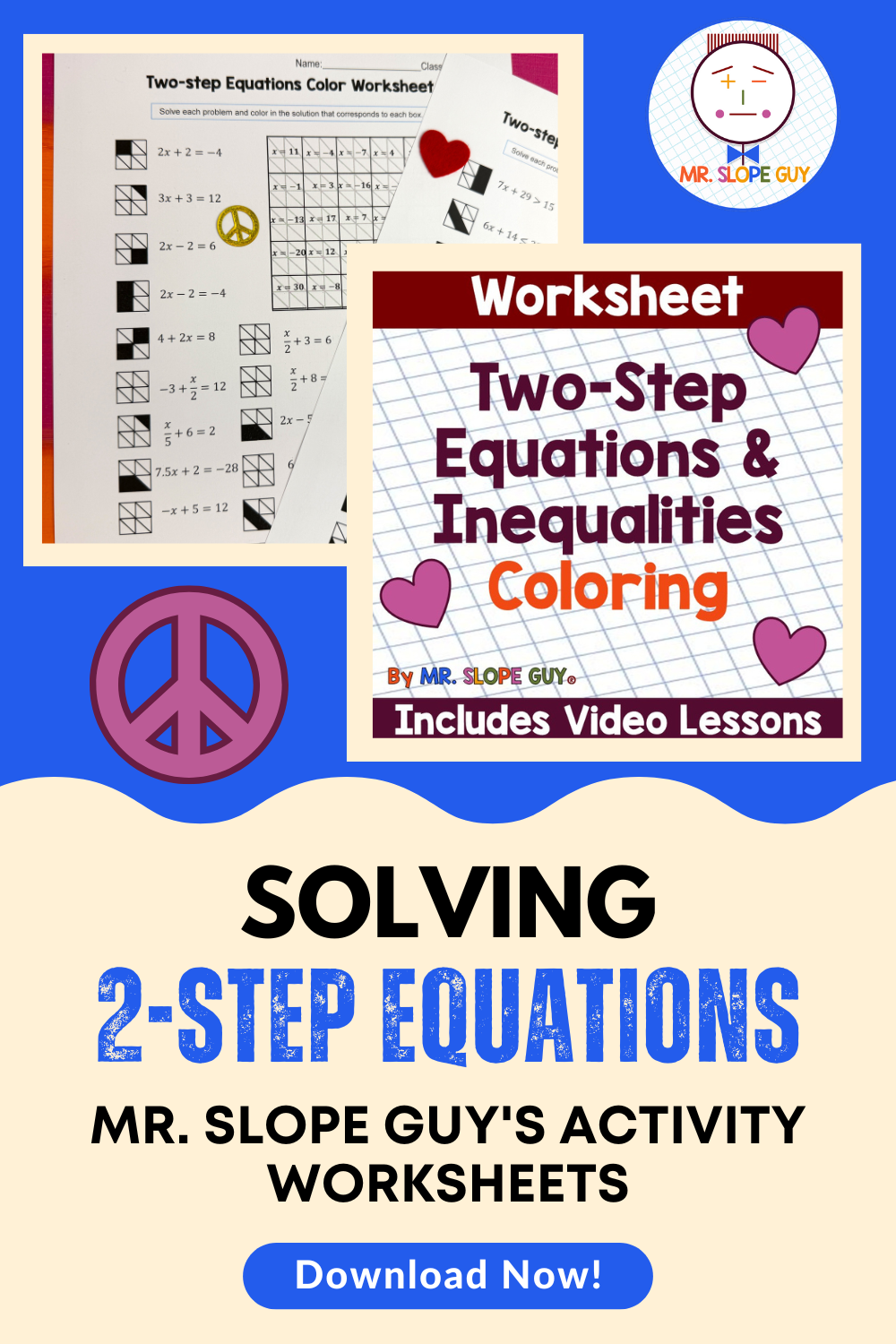
Peace, Love, and Algebra: Solving Two-Step Equations and Inequalities
If solving equations feels chaotic for students, it’s usually because everything is happening in their heads at once.
Numbers jump around, signs flip, and suddenly the answer appears… with no clear explanation of how they got there.
That’s why two-step equations and inequalities are such a powerful turning point in math. They bring order to the chaos. They give students a system. And with the right approach, they can turn frustration into confidence.
So let’s spread a little peace, love, and algebra in the classroom.
Why Two-Step Equations Matter So Much
Before students reach multi-step equations, systems, or quadratic equations, they must master the basics:
Undo addition and subtraction
Undo multiplication and division
Isolate the variable step by step
Two-step equations are the bridge between:
Simple one-step problems
Complex algebraic reasoning
They teach students that solving equations isn’t guessing. It’s following a logical sequence.
In other words:
Math isn’t magic. It’s method.
Moving Beyond “Doing Everything in Their Head”
Many students try to solve equations mentally:
They skip steps
They rely on intuition
They struggle to explain their reasoning
Two-step equations force students to slow down and show their thinking:
Undo addition or subtraction
Undo multiplication or division
Check the solution
This structure helps students:
Organize their work
Avoid careless mistakes
Build habits they’ll use in Algebra 1 and beyond
When students learn this process, multi-step equations stop feeling scary and start feeling manageable.
Why Structure = Confidence
Two-step equations and inequalities teach students that math is predictable. There is a path. There is a process.
This structure helps students:
Gain confidence in algebra
Reduce anxiety about showing work
Prepare for more advanced topics like multi-step equations, literal equations, and systems
When students trust the process, they stop guessing and start reasoning.
Coloring + Algebra = Engagement 🎨
Let’s be honest, practice alone doesn’t always motivate students.
That’s where coloring activities shine.
When solving equations reveals a picture:
Students stay focused longer
They receive instant feedback
The work feels like a puzzle instead of a worksheet
Coloring transforms repetitive practice into an interactive experience. And when students are engaged, learning happens naturally. Peaceful classroom vibes included. A good day for both students and teacher.
Why Two-Step Practice Is Worth the Time
Two-step equations and inequalities are more than a skill. They’re a foundation.
Students who master them:
Write clearer work
Solve complex problems more confidently
Transition more smoothly into Algebra 1
Skipping this step is like trying to build a house without a foundation. It might stand for a while, but eventually it collapses.
Ready to Bring Peace and Love to Algebra?
If you want an engaging, structured way to help students master two-step equations and inequalities, fora about $3, then this resource is perfect for your classroom.
Click link to preview and download: “👉 Equations & Inequalities with Two Steps – Fun Coloring Worksheet Activity”.
Why Teachers Love This Activity:
Focused practice on two-step equations and inequalities
Fun coloring format that boosts engagement
Clear structure to reinforce step-by-step thinking
Printable, no-prep PDF with answer key
Perfect for middle school students
Help your students move from mental math chaos to algebraic calm. ✌️❤️📐